

By Shahid Anwar
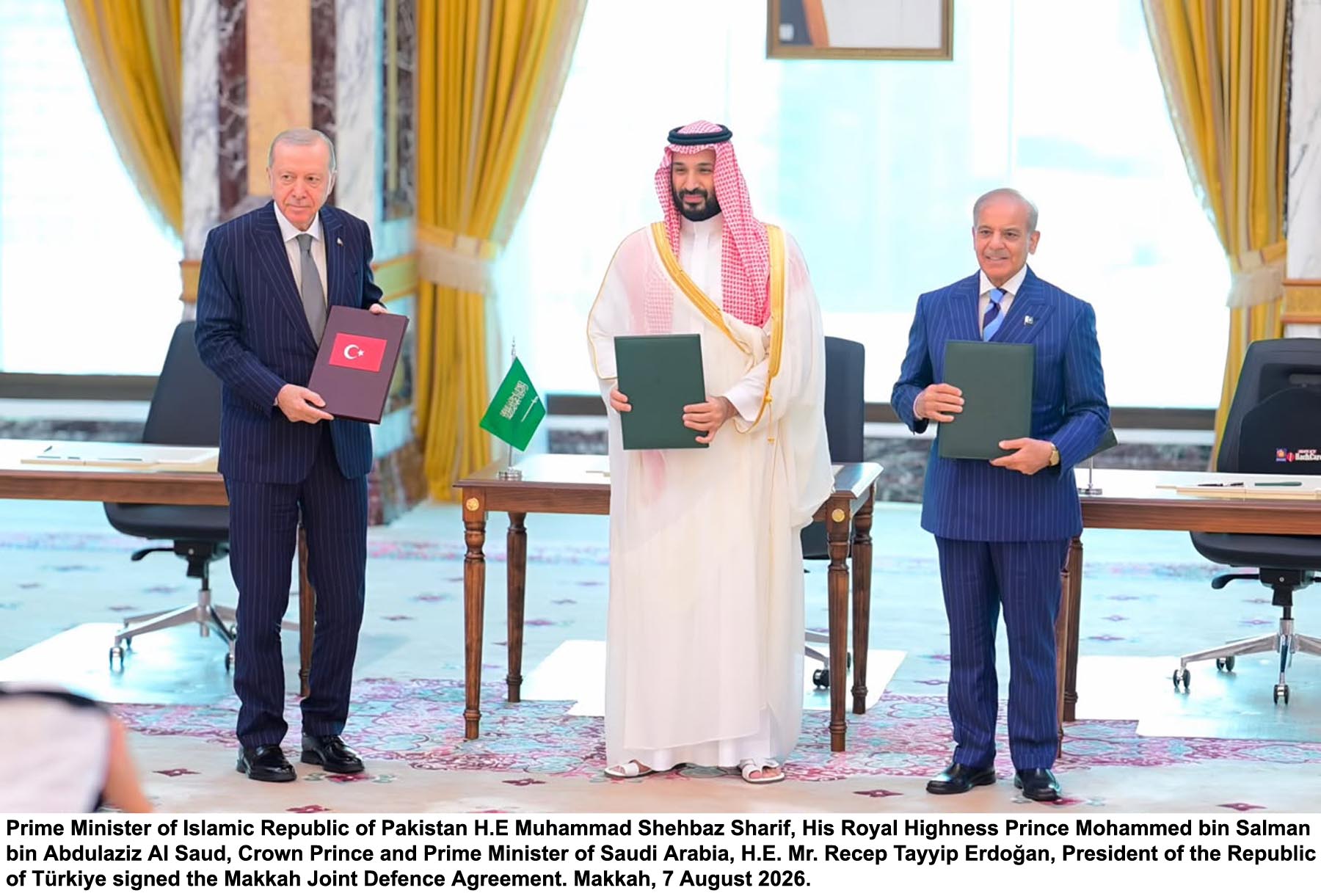
The Governments of Saudi Arabia, Trkiye and Pakistan deserve congratulations on signing the Mutual Defence Agreement. It is an important and timely initiative that underscores a powerful principle:
When we stand together, we are stronger.
The agreement reinforces mutual support and collective security among three important Muslim countries. However, in todays interconnected world, national security is not limited to defence. Economic vulnerability can also undermine a countrys resilience, sovereignty and policy space.
As an Economic Analyst, I believe the time has come to extend this spirit of mutual support to the economic front.
The Organisation of Islamic Cooperation (OIC) already has important economic institutions, including the Islamic Development Bank, as well as mechanisms for trade and economic cooperation. Yet several OIC member states continue to face challenges related to debt, foreign exchange shortages, balance-of-payments pressures and dependence on external financial assistance.
Pakistan should therefore propose an OIC Mutual Economic Security Pact at the next OIC meeting.
The concept is straightforward: build upon existing OIC institutions and create a stronger collective economic safety net for member countries facing serious financial and economic pressures.
Such a framework could focus on four key areas:
1. Financial Stability:
Developing mechanisms for emergency financial assistance to countries facing balance-of-payments difficulties, external financing gaps or severe foreign-exchange pressures.
2. Investment:
Mobilising surplus capital within the Muslim world and directing it towards productive investment, infrastructure, industry, technology and other development priorities.
3. Trade and Economic Integration:
Accelerating intra-OIC trade and investment by reducing barriers, improving connectivity and encouraging stronger economic partnerships among member states.
4. Islamic Finance:
Expanding the use of Sukuk and other Shariah-compliant financial instruments to finance infrastructure, development and economic transformation.
This proposal is not intended to replace the IMF or other international financial institutions. Rather, it would give OIC member states additional options, greater resilience and stronger collective economic capacity.
If we can develop mechanisms for mutual defence, why should we not also build mechanisms for mutual economic security?
Pakistan has an opportunity to take the lead by placing this proposal on the OIC agenda and initiating a member-state working group to develop a practical and sustainable framework.
Such an initiative could gradually evolve into a broader system of financial cooperation, investment mobilisation, trade facilitation and crisis support among OIC countries.
A strong Muslim Ummah needs to be secure not only in defence, but also in its economic future.
Pakistan should lead the conversation from mutual defence to mutual economic security.
The writer is an Economic Analyst and former Secretary General of the Federation of Pakistan Chambers of Commerce and Industry (FPCCI). He has also served as Senior Director Research at the Institute of Cost and Management Accountants of Pakistan (ICMAP). He can be reached at shahid.anwar.writer.26@gmail.com