



The Government of Sindh and the International Finance Corporation (IFC) have agreed to explore strategic collaboration in digital infrastructure, renewable energy, agriculture, healthcare, human capital development, social protection, and climate-resilient infrastructure to promote sustainable economic growth across the province.
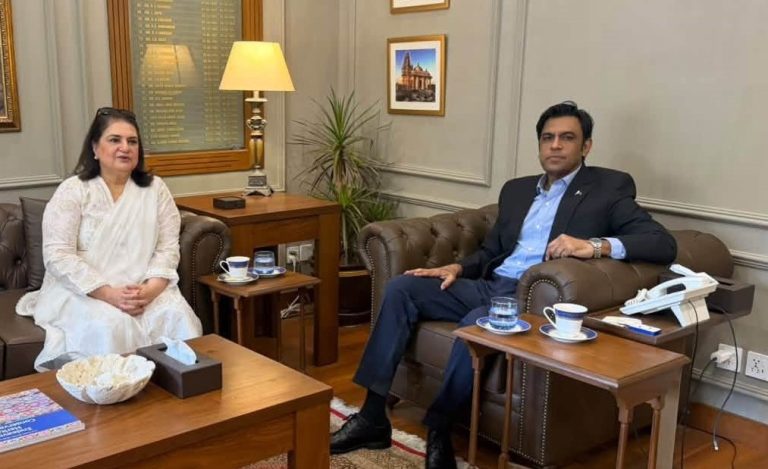
The understanding was reached during a meeting between Sindh Chief Minister Syed Murad Ali Shah and IFC Division Director for Pakistan Simon Andrews at the Chief Minister House. The meeting was attended by Sindh Minister for Planning & Development Jam Khan Shoro, Chief Secretary Sindh Asif Hyder Shah, Principal Secretary Agha Wasif, Chairman Planning & Development Najam Shah, Secretary Finance Fayaz Jatoi, and members of the IFC delegation, including Naz Khan and Sahar Etezaz.
During the meeting, Chief Minister Murad Ali Shah highlighted Sindh’s commitment to attracting investment in strategic sectors, including the establishment of an international data centre and the expansion of renewable energy projects for private sector participation.
He said the provincial government was focused on creating an enabling environment for investment in emerging sectors such as digital infrastructure and clean energy, which are vital for economic growth and employment generation.
Agriculture also featured prominently in the discussions, with both sides exploring ways to strengthen agricultural value chains, improve storage and processing facilities, and increase farmers’ productivity through mechanisation. The Chief Minister noted that many farmers in Sindh own small landholdings of up to 25 acres and proposed encouraging neighbouring farmers to jointly acquire subsidised tractors to improve efficiency and productivity.
The meeting also focused on human capital development, particularly healthcare, nutrition, education, and skills training. Discussions included cooperation on Sindh’s stunting reduction programme aimed at improving children’s health and educational outcomes.
Murad Ali Shah shared the government’s vision of producing at least 15,000 trained nurses annually to meet domestic healthcare needs while creating overseas employment opportunities. He said the government was prepared to initiate the programme with private sector participation to ensure its long-term sustainability.
Recognising Pakistan’s shortage of qualified nursing professionals, both sides agreed to collaborate on developing a comprehensive framework for nursing education and specialised training.
IFC Division Director Simon Andrews appreciated the Sindh government’s reform agenda and reaffirmed IFC’s commitment to supporting sustainable and inclusive development through investments in digital infrastructure, renewable energy, agribusiness, healthcare, and human capital.
The meeting also reviewed opportunities for cooperation on climate-resilient infrastructure and integrating climate risk management into Public-Private Partnership (PPP) projects across Sindh.
The IFC Sustainable Infrastructure Advisory Team proposed providing technical assistance to incorporate climate risk assessments and adaptation measures into the planning, appraisal, and management of PPP projects. The Sindh PPP Unit requested IFC support in strengthening institutional capacity, developing climate resilience guidelines, and integrating climate risk assessment tools into project planning.
Chief Minister Murad Ali Shah stressed that climate resilience must become an integral part of infrastructure development, saying that every new public investment should be designed to withstand the growing impacts of climate change and remain sustainable for future generations.
Simon Andrews reiterated IFC’s commitment to helping Sindh develop climate-smart infrastructure by integrating climate risk management into development planning, protecting investments, and ensuring long-term benefits for communities.
Both sides agreed to continue consultations on developing a comprehensive framework for climate risk assessment, adaptation planning, and resilience-focused PPP project development to support Sindh’s long-term sustainable growth.