


By Yousuf Ibnul Hasan
Pakistan today stands at a crossroads where almost every signpost appears to point towards a familiar destination: rising inflation, shrinking purchasing power, stagnant growth, ballooning public expenditure and an increasingly frustrated citizenry. The ordinary Pakistani is therefore entitled to ask a simple yet unsettling question: Are we treating the disease, or merely polishing the thermometer?
Over the past few years, an increasingly uncomfortable debate has entered the national conversation: Does Pakistan really need its present administrative structure, or has the expansion of bureaucracy become an expensive exercise in political accommodation rather than effective governance? Put bluntly, are we building governments to serve the people, or creating more people to serve governments?
Every new administrative layer promises greater efficiency. Yet, somehow, it often delivers another fleet of official vehicles, another convoy of flashing lights, another collection of protocol officers and another budget that taxpayers are expected to finance. In Pakistan, it sometimes appears that governments multiply much faster than prosperity.
Supporters of a stronger and more centralised administration argue that authority scattered among competing centres of power can produce confusion rather than coordination. When everyone is in charge, they contend, no one is truly accountable. As the old saying goes, too many cooks spoil the broth, and Pakistan’s national kitchen has certainly seen its share of overcrowding.
Those who advocate administrative consolidation frequently point to Pakistan’s earlier decades. Between the late 1950s and the close of the 1960s, the country experienced one of its most notable periods of economic expansion. Industrial output increased, infrastructure projects transformed the landscape, exports grew, and Pakistan gained international recognition as one of Asias emerging economies. Investor confidence strengthened, development gathered pace, and the country projected an image of economic promise that many today remember with understandable nostalgia.
No period in history is perfect, and the past should never be romanticised. Nevertheless, history can offer valuable lessons. Supporters of centralised governance argue that a leaner administrative structure enabled quicker decision-making, lower operating costs and more effective deployment of national resources. Whether one fully accepts that conclusion or not, it is a perspective worthy of serious discussion rather than immediate dismissal.
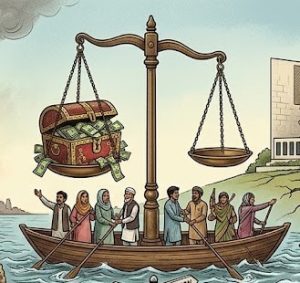
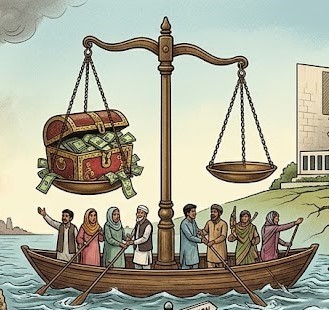
The decades that followed witnessed the steady expansion of political competition, provincial identities, bureaucratic structures and institutional complexity. Diversity is undoubtedly a national strength. But when regional interests begin to overshadow national priorities, unity inevitably pays a price. Instead of rowing together, every province can begin steering in its own direction while the national boat drifts wherever the current takes it.
Critics also argue that successive waves of nationalisation weakened entrepreneurship, discouraged investment and transferred excessive responsibility to an already overburdened state. Governments became larger, while efficiency often became smaller. Bureaucracies expanded, paperwork multiplied and committees proliferated, but meaningful results frequently remained as elusive as a punctual government project.
One cannot help but smile at the irony. In Pakistan, when a problem refuses to disappear, the instinctive solution often seems to be the creation of another committee, ministry, authorityor perhaps another province. The problem itself, unfortunately, rarely receives the same enthusiasm.
Yet the debate extends far beyond administrative boundaries. At its heart lies a much more fundamental question: What kind of state does Pakistan aspire to become?
Pakistan was founded on ideals of justice, integrity, accountability and public welfare. These are not abstract slogans reserved for speeches on national holidays; they are the foundations upon which every successful state ultimately rests. Throughout Islamic history, particularly during the era of the Rightly Guided Caliphs, governance derived its legitimacy not from the size of bureaucracy but from the quality of justice delivered to the people. Governments earned respect when they remained answerable to both law and conscience.
Today, however, many ordinary Pakistanis feel increasingly disconnected from the state that is supposed to serve them. Inflation has become an unwelcome member of almost every household. Employment opportunities remain limited, public services frequently disappoint, and taxation continues to squeeze citizens whose incomes are already documented. Meanwhile, significant segments of the economy remain outside the effective tax net, leaving salaried professionals and compliant businesses to shoulder a disproportionate share of the national burden.
This imbalance has fuelled a widespread perception that political elites, influential bureaucracies and powerful economic interests continue to consolidate privilege while ordinary citizens are repeatedly asked to tighten their belts. It is difficult to preach sacrifice to a population that suspects the sermon is always directed at the congregation and never at the clergy.
Perhaps that explains why public confidence has steadily eroded. Citizens do not merely seek promises; they seek fairness. They are less interested in hearing who should receive the next constitutional amendment than in knowing who will repair their schools, strengthen hospitals, create employment, ensure impartial justice and restore confidence in public institutions.
This is where the real debate begins.
Administrative maps alone do not determine national success. A country cannot legislate prosperity simply by drawing new lines on an old map. Whether Pakistan has four provinces, eight provinces or forty administrative units matters far less than whether those institutions actually deliver justice, efficiency and opportunity. After all, rearranging the furniture does little good if the house itself needs repair.
The real challenge, therefore, is not simply whether Pakistan should have more provinces or fewer. The more pressing question is whether the country can build a system that delivers justice, rewards merit, protects taxpayers and places the national interest above political convenience.
Structural reform, by itself, is no magic wand. One can repaint a crumbling house, but unless its foundations are strengthened, the cracks will soon reappear. Pakistans administrative architecture, whatever shape it ultimately takes, must therefore be accompanied by deeper institutional reforms.
Fiscal Discipline: The First Priority
The first priority must be fiscal discipline. Governments, like households, cannot spend indefinitely beyond their means. Public expenditure must reflect national income rather than political ambition.
Every unnecessary office, ceremonial privilege, redundant department and lavish perk ultimately comes at the expense of a school left unbuilt, a hospital left understaffed or a road left unfinished. The state must embrace simplicity not merely as an act of austerity but as a principle of responsible governance.
Citizens are far more willing to tighten their belts when they see those in power loosening theirs.
A Fairer Tax System
Equally urgent is comprehensive tax reform. Pakistans taxation system has long resembled an umbrella full of holes: those standing honestly beneath it get soaked, while others somehow remain perfectly dry.
Salaried professionals and documented businesses continue to shoulder much of the burden, while substantial sectors of the economy contribute little or nothing. Taxation should never be viewed as a punishment for honesty. It should represent a fair contribution towards a common national future.
Every individual and every sector should contribute according to genuine capacity, ensuring that responsibility is shared rather than concentrated on the compliant few.
Justice and the Rule of Law
Judicial reform is another indispensable pillar of national renewal.
Justice delayed is more than justice denied; it gradually erodes public confidence in the state itself. Investors hesitate, businesses suffer, disputes remain unresolved and corruption flourishes when accountability is slow or selective.
An independent judiciary that delivers swift and impartial justice serves not merely the courts but the entire economy. Confidence in the rule of law is often the invisible foundation upon which sustainable prosperity is built.
Merit Over Patronage
No less important is the restoration of merit throughout the civil service and public institutions.
Appointments and promotions should never depend upon political patronage, family connections or personal loyalties. Nations prosper when competence becomes the passport to public officenot influence.
A credible accountability system must likewise apply equally to everyone. Accountability that targets opponents while politely avoiding friends quickly loses both its moral authority and public trust.
The law should neither bow before wealth nor salute political power.
Ultimately, no constitution, administrative model or governing philosophy can succeed if the people entrusted with implementing it lack integrity.
Democracies do not fail simply because citizens vote. Centralised systems do not fail simply because authority is concentrated. Both succeed or collapse according to the character, competence and honesty of the people who administer them.
Institutions, Not Personalities
History repeatedly reminds us that prosperous nations are built upon strong institutions rather than strong personalities. Buildings can be erected within months; institutions require years of consistent honesty, discipline and public confidence.
Pakistan possesses many advantages that countries far wealthier would gladly envy. Its strategic location connects major regions and markets. Its natural resources remain substantially underutilised. Its young population represents enormous economic potential. Above all, Pakistan possesses resilient people who continue to display remarkable patience despite recurring economic hardship.
The challenge is not a shortage of potential. It is a shortage of priorities.
If governance becomes transparent, justice becomes accessible, merit replaces patronage, public money is treated as a sacred trust rather than political spoils, and national unity rises above provincial rivalries, Pakistans future need not remain an aspiration. It can become an achievement.
Perhaps, then, the national conversation has been asking the wrong question all along.
The issue is not whether Pakistan should have four provinces or fourteen. Maps do not create prosperity; good governance does.
Administrative boundaries cannot compensate for institutional weakness, nor can constitutional amendments substitute for honesty, competence and accountability.
As the saying goes, a chain is only as strong as its weakest link. Likewise, a nation is only as strong as the integrity of its institutions and the trust of its citizens.
So, should Pakistan retain its present provincial structure or move towards a more centralised model?
Reasonable people will disagree, and that debate deserves thoughtful consideration rather than political slogans. More provinces may, under certain circumstances, improve representation and administration. But if creating new provinces merely means adding more bureaucratic structures, political offices and public expenditure without improving service delivery, the taxpayer has every right to ask: Who will pay the bill?
One conclusion, however, appears difficult to escape: Pakistans destiny will not be decided by the number of provinces it has, but by whether justice prevails over privilege, merit triumphs over patronage, accountability replaces impunity, and national purpose rises above narrow political interests.
When those principles guide the affairs of the state, prosperity ceases to be a distant dream. It becomes the natural consequence of good government.
The map may divide territory, but only wise governance can unite a nation.
The columnist is a Program Consultant in Islamic Banking and Applied Finance, teacher, trainer, author, banker and broadcaster. He can be reached at pride4pen@gmail.com
Disclaimer: This content is published strictly for educational, informational, and discussion purposes. While reasonable efforts are made to ensure the accuracy of the commentary, readers are encouraged to independently verify any economic data, historical references, or legal principles discussed. The image is AI-generated and is used for illustrative purposes only.