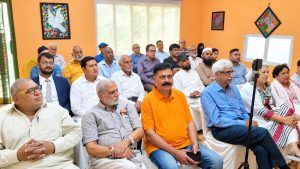


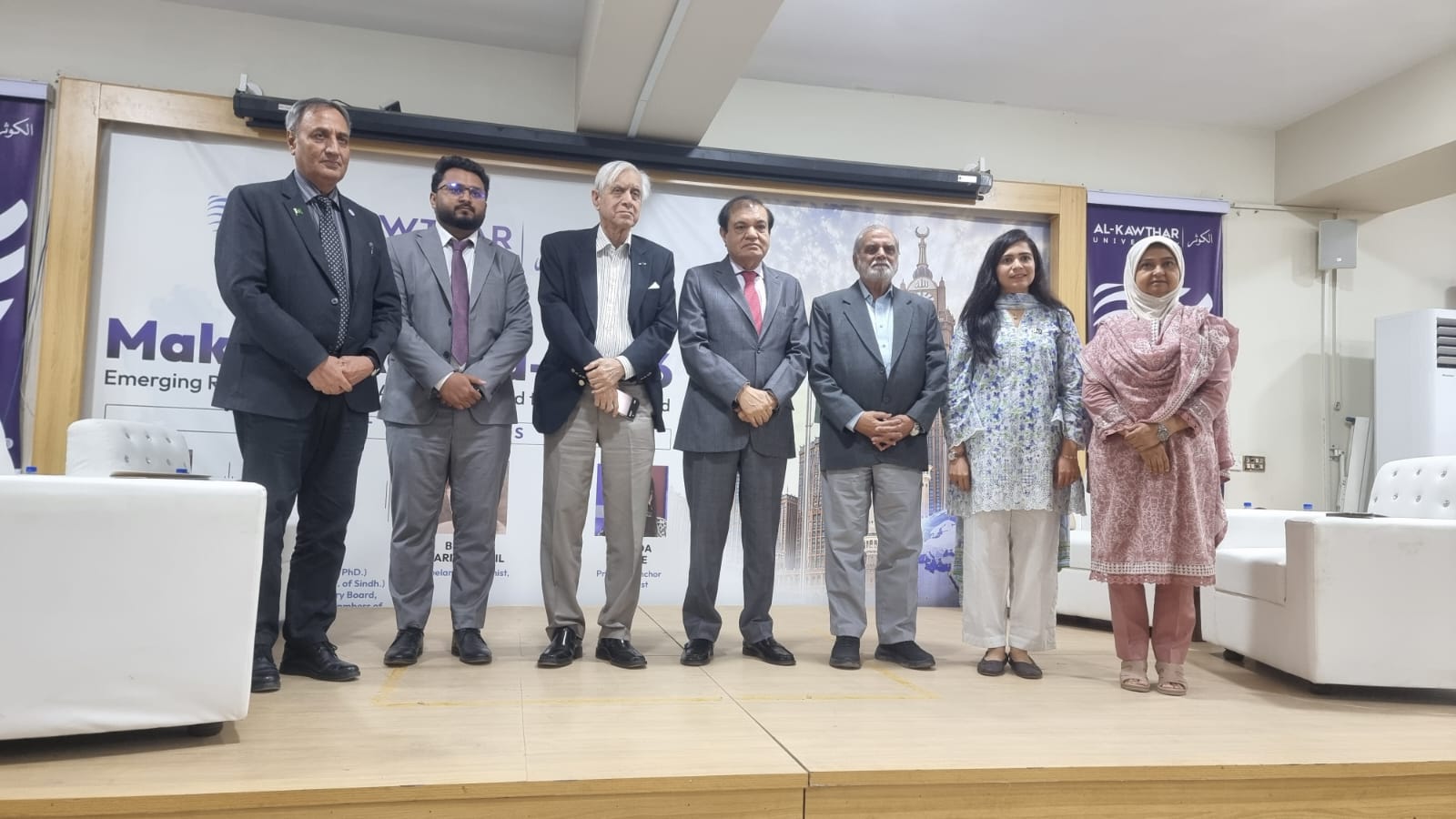
Karachi: A seminar titled Makkah Accord-2026: Emerging Regional Security Architecture and the Muslim World was held at Al-Kawthar University, bringing together academics, business leaders, defence experts and media professionals to discuss the implications of the emerging regional security framework.
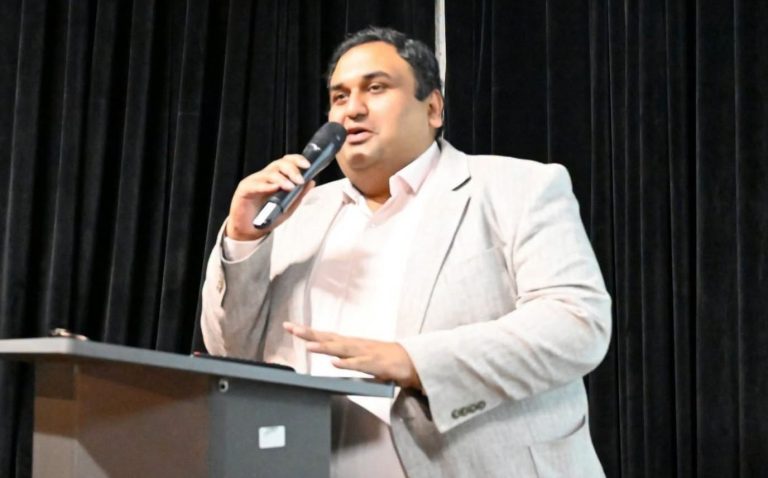
Senior anchorperson of K-21 News, Rida Saifee, participated as a guest panelist and expert analyst. Other panelists included businessman Mian Zahid Hussain, Prof. Dr. Shaista Tabassum of the Department of International Relations, University of Karachi, and Brigadier (Retd.) Tariq Khalil.
During the interactive session, Rida Saifee responded in detail to questions from students regarding the Makkah Accord and its potential impact on regional security and the Muslim world.
Pakistan Seeks More Layers, Not New Blocs
In her address, Saifee explained that following the Makkah Joint Defence Agreement signed on August 7, 2026, Pakistans strategic objective could be described as more layers, not new blocs. She said Pakistan was seeking to act as a bridge among regional and global partners rather than choosing sides.
According to the discussion, Saudi Arabia, Trkiye and Pakistan have entered into a mutual defence arrangement under which an attack on one member is treated as an attack on all.
However, the emerging arrangement does not require its members to abandon their existing strategic relationships. Saudi Arabia continues its ties with the United States, Trkiye remains a member of NATO, while Pakistan maintains partnerships with China, Iran and Gulf countries.
Saifee described the approach as one of strategic self-reliance, not replacement, stressing that Pakistan’s challenge is to balance its relationships while protecting its strategic interests.
Pakistan as a Regional Bridge
The panel discussion highlighted Pakistan’s potential role as a regional stabiliser and security bridge. Pakistan has also pointed to its diplomatic engagement and mediation efforts during the recent US-Iran conflict as an example of its ability to maintain communication with different sides.
The strategy, according to the discussion, is based on maintaining working relationships with multiple countries while avoiding being drawn into rival camps.
Saifee outlined three broad dimensions of Pakistan’s post-Makkah strategy:
- Regional stabiliser contributing to peace and stability in the region.
- Security bridge maintaining communication and cooperation across different strategic groupings.
- Flexible framework strengthening defence cooperation without abandoning existing economic, diplomatic and strategic partnerships.
She also noted that Pakistan has made it clear that it does not want to become part of a new division among Muslim countries.
A New Layer of Regional Cooperation
The seminar concluded that the post-Makkah environment does not necessarily represent Pakistan’s selection of one geopolitical camp over another. Instead, the country appears to be adding a trilateral Muslim defence layer while continuing to rely on its broader economic, security, financial, defence, technology, military and diplomatic partnerships.
The seminar provided students with an opportunity to engage directly with experts on the changing regional security architecture and Pakistan’s evolving role in the Muslim world.