


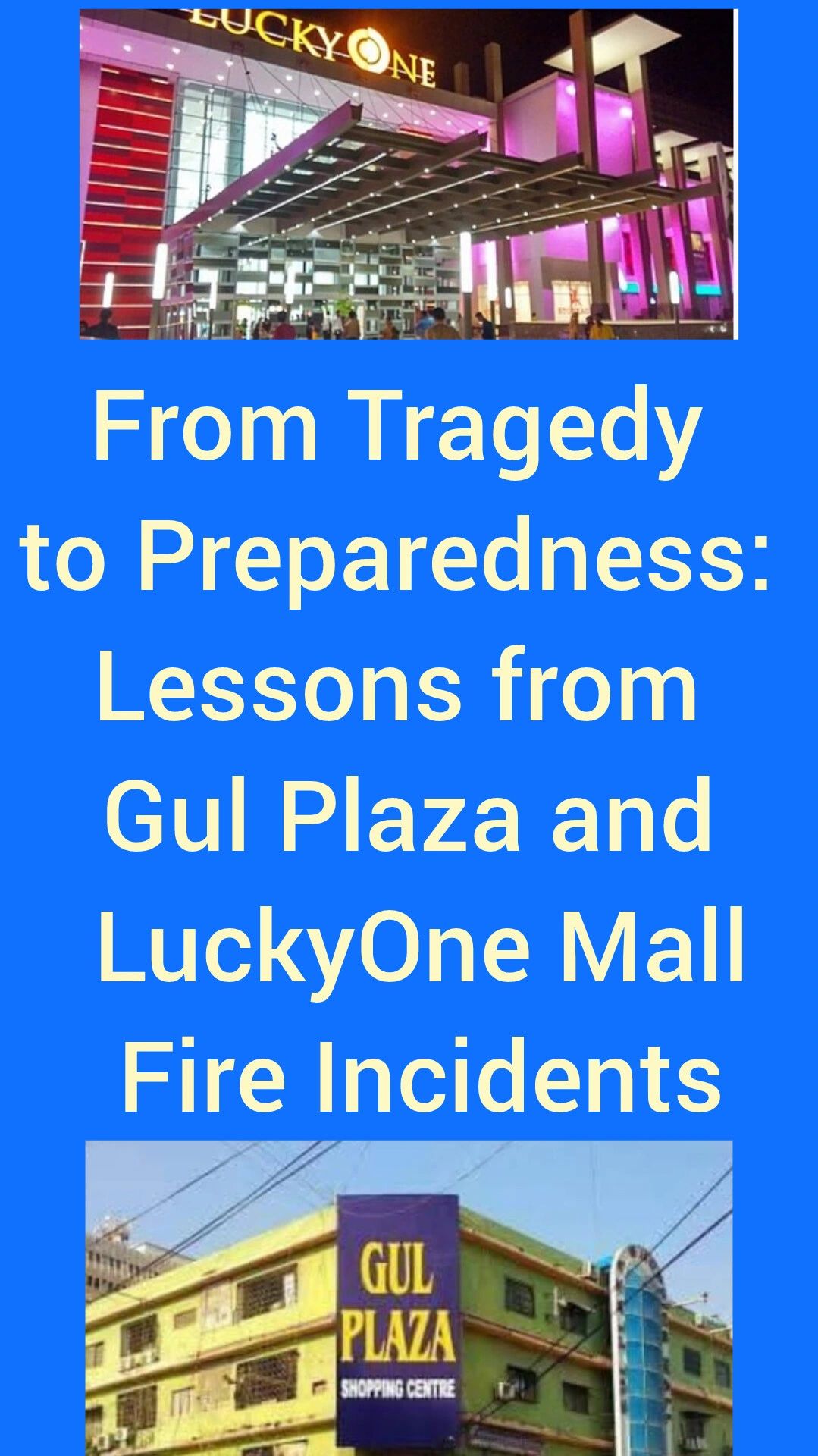
The recent fire incidents at Gul Plaza and LuckyOne Mall in Karachi highlight a critical reality: disasters are not defined solely by the ignition of a fire, but by the level of preparedness, safety compliance, and emergency response that follows.
The 2026 Gul Plaza disaster became a devastating tragedy due to the absence of essential fire safety measures. Reports indicate that a small ignition source rapidly escalated because of inadequate ventilation, lack of fire separation systems, insufficient firefighting equipment, and blocked or locked emergency exits. The result was a catastrophic loss of life and property.
In contrast, LuckyOne Mall demonstrated how effective safety infrastructure can prevent disaster. The prompt activation of fire separation systems, ventilation controls, suppression mechanisms, and organized evacuation procedures enabled hundreds of visitors to exit safely, with only minor smoke-related injuries reported.
Key Lessons for Mall Administrations
Regular maintenance of fire extinguishers, sprinkler systems, smoke detectors, and ventilation systems.
Unobstructed emergency exits, stairwells, and evacuation routes at all times.
Well-trained in-house emergency response teams capable of initiating immediate containment and crowd management.
Frequent fire drills and coordinated exercises with Civil Defence and rescue authorities.
Key Responsibilities for Rescue & Emergency Services
Rapid deployment of firefighting and rescue units with immediate perimeter establishment.
Continuous structural integrity assessments to safeguard both victims and responders.
Effective coordination between fire brigades, rescue services, hospitals, and government agencies for timely evacuation, treatment, and crisis management.
The contrast between these two incidents sends a powerful message: Fire safety is not a regulatory checkbox, it is a life-saving investment. Prevention, preparedness, and coordination can mean the difference between a controlled emergency and a national tragedy.
Every commercial building, shopping center, and public facility must treat fire safety as a continuous operational priority rather than a post-disaster discussion.
Disclaimer: This post is based on publicly reported information and media coverage available at the time of writing. The purpose is to highlight fire safety, emergency preparedness, and risk management lessons for public awareness and professional discussion. Any ongoing investigations or official findings should be referred to for definitive conclusions.







KIndly send your profile. Thanks
[…] Also read: Karwan-e-Hayat Hosts Delegation from Pakistan Institute of Living and Learning and Univer… […]
[…] Korangi Police Arrest Two Key Suspects in Rs. 9.7 Million Cash Van Robbery within 24 Hours […]