

AI in Education: Supporting Teachers, Not Replacing Them

AI in Education: Supporting Teachers, Not Replacing Them

By Samreen Haseeb
Instructional Coach Trainer | Public Speaker | Education Leader | Writer

Artificial Intelligence (AI) is rapidly transforming industries across the globe, and education is no exception. Once viewed as a futuristic concept, AI has now become an integral part of modern classrooms, offering innovative ways to enhance teaching and learning. While some educators and parents worry that AI may eventually replace teachers, experts argue that its true purpose is to support educators rather than substitute the human element that lies at the heart of education.

Teaching has never been limited to delivering information. Effective educators inspire curiosity, encourage critical thinking, build confidence, and create inclusive environments where students feel respected and motivated to learn. These essential human qualitiesempathy, mentorship, emotional intelligence, and personal guidance, cannot be replicated by machines, regardless of technological advancements.

Instead of replacing teachers, AI serves as a powerful educational assistant. It can help educators prepare lesson plans, create engaging learning materials, personalize instruction according to students’ needs, generate assessments, analyze academic performance, and provide timely feedback. By automating repetitive administrative tasks, AI allows teachers to dedicate more time to mentoring students, encouraging creativity, and addressing individual learning challenges.

The integration of AI into education also highlights the need for continuous professional development. Teachers must be equipped with the skills and confidence to use AI responsibly and effectively. Training programs should extend beyond learning digital tools to include ethical considerations, academic integrity, student data privacy, and responsible AI usage. Technology should strengthen sound teaching practices rather than replace them.

For students, AI presents exciting opportunities for personalized learning, independent exploration, collaboration, and skill development. When used appropriately, AI can encourage curiosity and critical thinking by providing access to diverse learning resources and interactive educational experiences. However, students must also learn that AI is a tool designed to enhance human thinking, not replace reasoning, analysis, communication, creativity, and real-world problem-solving abilities.

Pakistan’s education sector stands at an important crossroads. By investing in teacher training, digital literacy, and equitable access to technology, the country can ensure that AI contributes positively to educational outcomes. Policymakers, educational institutions, and technology providers must work together to build an education system where innovation remains focused on student learning, inclusion, and human values rather than technology for its own sake.

The future of education will not be determined by artificial intelligence alone. It will be shaped by knowledgeable, compassionate, and visionary educators who understand how to use technology with purpose. AI may transform the tools available in classrooms, but teachers will always remain the driving force behind meaningful learning experiences.

As education continues to evolve in the digital age, investing in teachers remains the most valuable investment any nation can make. Technology will continue to advance, but the guidance, inspiration, and influence of a dedicated teacher will remain irreplaceable in shaping future generations.

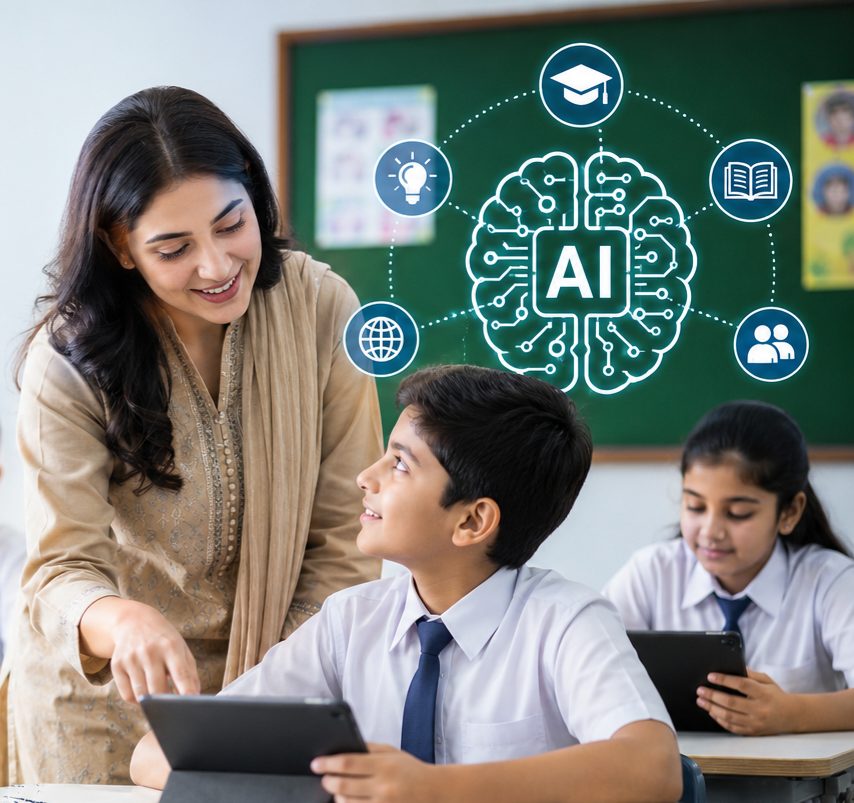
The accompanying image is AI-generated and is intended solely for illustrative purposes.

More From Author

Peace Council for Human Rights, PCHR, Ibn-e-Sina Institute, World Ageing Council, Türkiye, D-8 Health Summit, Healthcare Expo Karachi, Expo Centre Karachi, Muhammad Babar Ali, Dr. Kemal Aydın, T.M. Augustine Gill, Amin ur Rehman Khan, healthy ageing, elder rights, healthcare, international cooperation, Pakistan, MoU, ageing, senior citizens

Peace Council for Human Rights Signs Strategic Partnership with Turkiye’s Ibn-e-Sina Institute and World Ageing Council

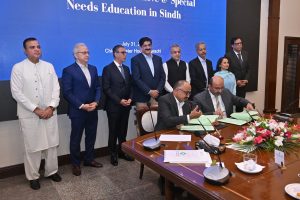
Karachi, Pakistan: In a move set to reshape how Pakistan educates children with disabilities, the Sindh Cabinet has approved a five-year partnership between the Department of Empowerment of Persons with Disabilities (DEPD) and the Aga Khan University’s Institute for Educational Development (AKU-IED). The Memorandum of Understanding was signed today at Chief Minister House, Karachi. Chief Minister Sindh Syed Murad Ali Shah, who witnessed the signing, called it “not merely an agreement” but “a solemn commitment to every child with disabilities in Sindh that their dreams matter, their potential is recognised, and their future will no longer be limited by barriers." The partnership will establish an Inclusion and Special Educational Needs (SEN) Unit at AKU-IED, for training, research, and innovation that will house sensory rooms, therapy spaces and dedicated resource centres. The initiative aims to train more than 2,000 educators and, through them, reach an estimated half a million school children over the next five years. According to UNICEF, an estimated 96% of children with disabilities in Pakistan are out of school, with Sindh bearing a large proportion of this burden due to poverty, gender disparities, and limited functional accessibility. Overall, Sindh has 7.4 million out-of-school children, where disability acts as a major compounding barrier to attendance. "For too long, children with disabilities have been invisible in our education system,” said Mr Tuaha Ahmed Faruqui, Secretary of DEPD. “Today, we are making a promise to every family in Sindh that their children matter." The initiative's most ambitious commitment is workforce transformation. AKU-IED will deliver modular courses, Training-of-Trainers programmes, and certification pathways to more than 2,000 educators. Its Bachelor of Education degree will offer specialisation in inclusive education with monthly stipends. Beyond training, the collaboration establishes a province-wide research and advocacy agenda: baseline assessments, implementation evaluations, and annual policy commissions to inform government decisions. Biennial SEN conferences and policy seminars will convene experts and advocates, while public education campaigns will produce multimedia resources, toolkits, and community sensitisation initiatives to shift mindsets about disability inclusion. "This is not just an institutional milestone,” said Professor Farid Panjwani, Dean, AKU-IED. “It is a commitment to every child in Sindh who has been waiting for an education system that sees them, hears them, and empowers them." The Government of Sindh will provide grant funding, while AKU-IED contributes expertise and institutional resources. The SEN Unit will develop a strategic roadmap designed to sustain impact well beyond the five-year term. “The true measure of an education system is whether it reaches those who have historically been left furthest behind. By preparing teachers and schools to educate children with special needs, this partnership will help to ensure that all our children have the opportunity to fulfill their potential.” said Dr Sulaiman Shahabuddin, President, Aga Khan University. The partnership envisions a Sindh where every child, regardless of ability, finds belonging, understanding, and empowerment in their classroom, a future now within reach.

AKU-IED and Sindh Government Established a Landmark Partnership for Inclusive Education

Leave a Reply

Your email address will not be published. Required fields are marked *