



By Murk Rashid
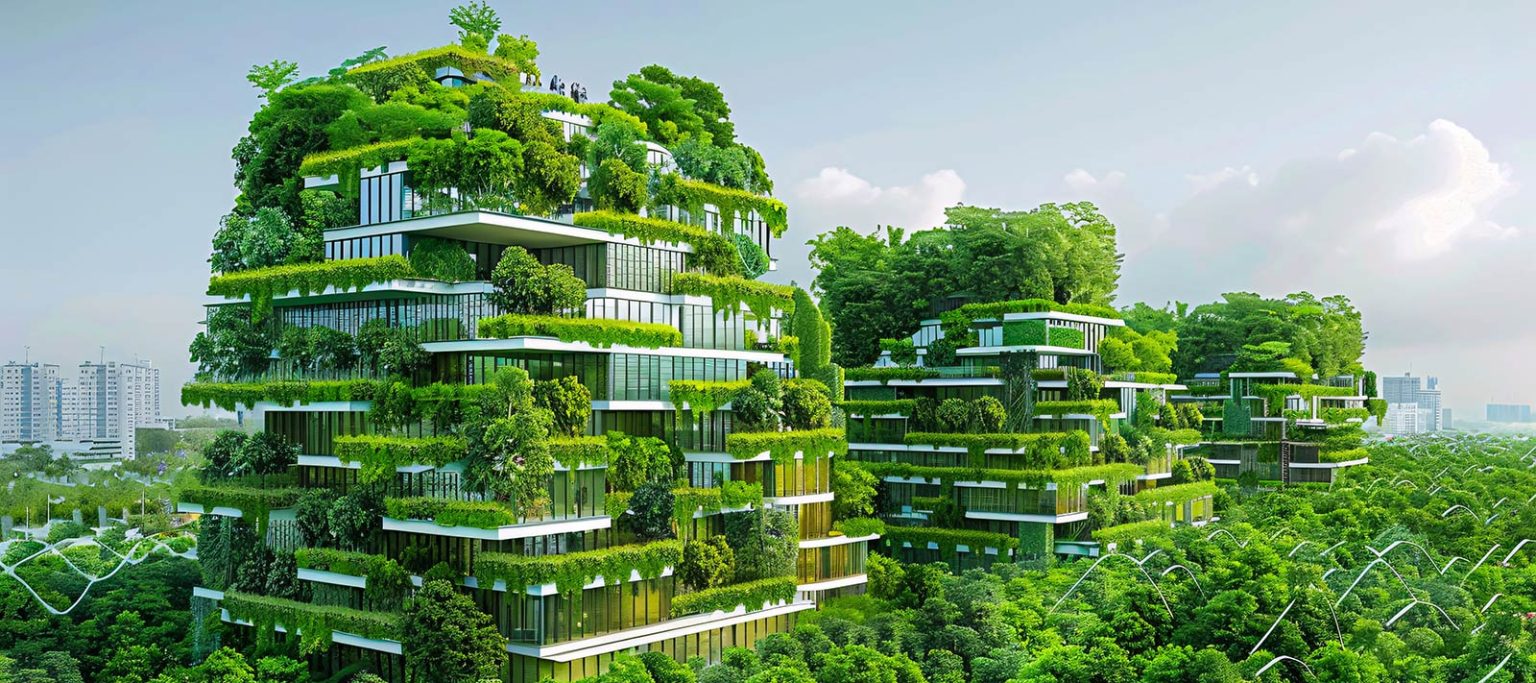
Karachi is increasingly feeling the impacts of climate change. More frequent heatwaves, rising temperatures, shrinking green spaces, and rapid urbanization are making the city hotter and less liveable. As Pakistan’s largest metropolis continues to expand, its landscape is increasingly dominated by concrete buildings, roads, flyovers, and boundary walls that absorb and retain heat. In response, ideas such as vertical greening, using vegetation on walls and building facades, are gaining global attention. But before adopting this trend, Karachi must ask a more important question: Is it the right solution for our city?
Cities like Singapore, Milan and Melbourne have successfully integrated vertical gardens to improve air quality, reduce surface temperatures, and enhance urban aesthetics. However, effective public policy is not about copying international models; it is about adapting ideas to local realities.
Karachi’s growing urban heat island effect, where built-up areas become significantly hotter than surrounding regions, has intensified the impact of heatwaves. Greening vertical surfaces can help cool buildings, provide insulation, and improve the urban environment, especially in densely populated areas where space for parks is limited. In this sense, vertical greening deserves serious consideration as part of the city’s climate adaptation strategy.
Yet, the challenges are equally significant. Living walls require irrigation, regular maintenance, and technical expertise. Karachi already faces chronic water shortages, weak municipal maintenance systems, and limited public resources. Without long-term planning, vertical gardens risk becoming neglected infrastructure rather than sustainable environmental assets.
Water is perhaps the biggest concern. Allocating it for large-scale green walls is difficult to justify when many communities lack reliable water supply. Any future initiative should therefore prioritize drought-tolerant native plants, drip irrigation, rainwater harvesting where feasible, and the use of treated greywater. Climate adaptation should not come at the expense of water security.
There is also the question of priorities. Karachi urgently needs more roadside trees, neighbourhood parks, urban forests, and protection of its mangroves. These interventions generally provide greater environmental benefits and serve larger populations at lower cost. Vertical greening should therefore complement, not replace traditional urban forestry.
At the same time, dismissing the idea entirely would not be wise. Karachi has many locations where conventional tree planting is impractical, including flyover pillars, parking structures, boundary walls of public buildings, schools, hospitals, and commercial high-rises. Carefully designed pilot projects at these sites could help assess costs, maintenance needs, and cooling benefits before wider adoption.
Ultimately, the success of vertical greening will depend less on technology than on governance. The Karachi Metropolitan Corporation, Sindh Building Control Authority, urban planners, architects, universities, and the private sector should collaborate to develop practical design standards, identify suitable locations, and establish clear maintenance responsibilities. Decisions should be guided by evidence rather than aesthetics alone.
Karachi does not need to choose between parks, trees, and vertical gardens. It needs an integrated urban greening strategy that strengthens climate resilience while reflecting the city’s environmental and institutional realities. Vertical greening is not a silver bullet, but if implemented selectively and sustainably, it can be a valuable tool for building a cooler, healthier, and more climate-resilient Karachi.
The writer is a Karachi-based public policy analyst specializing in climate resilience, gender and energy justice, and evidence-based policymaking. She can be reached at murklarik@gmail.com