


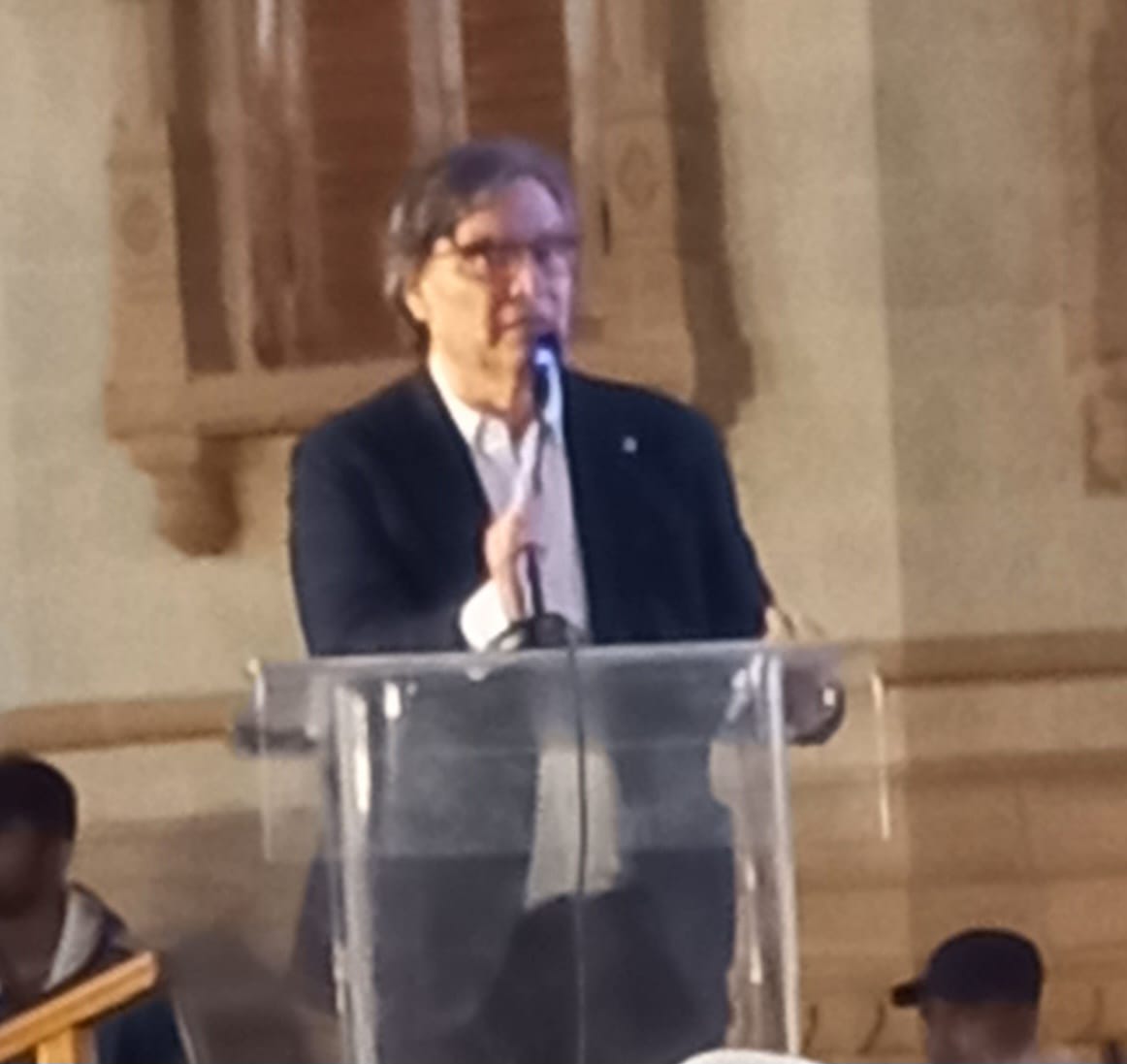
Karachi: Prof Eduardo Manzano Moreno, Spains foremost historian of medieval Al-Andalus, delivered a compelling lecture titled The Umayyad Caliphate that was Cordoba at Mohatta Palace on Monday evening, tracing the dramatic survival of the Umayyads and the intellectual flowering of Muslim Spain.
Speaking to an engaged audience, Prof Manzano recalled the violent aftermath of the Abbasid revolution in 750. The Umayyad ruling family, he said, faced systematic persecution. The Abbasids massacred all the members of the family, he noted, adding that they even desecrated the tombs of Umayyad caliphs.
Despite this brutal rupture, an Umayyad polity emerged in Iberia and, by the 10th century, Al-Andalus had developed into what Manzano described as a society that had become deeply Arabized. Challenging older interpretations, he referred to the once-popular view that Islam in Spain was merely superficial, likened by a Spanish scholar to a little drop of red colour in water. You change the colour, but the water remains the same.
Manzano argued that the historical record tells a different story. Andalusi scholars, he explained, carefully documented their intellectual world in detailed biographical dictionaries. Modern research drawing on these compilations has identified more than 11,500 scholars active over eight centuries.
These people managed to create the culture of Al-Andalus, he said. So the impact of these 11,000 people is quite remarkable.
He also highlighted the vast scholarly networks maintained by Andalusi intellectuals, many of whom travelled great distances, even to Central Asia, in search of manuscripts and new ideas. The Andalusians were extremely keen on the idea of bringing back knowledge to Al-Andalus, he added.
The lecture offered a rich portrait of Cordobas Umayyad era, underscoring its resilience, cosmopolitanism and enduring contribution to global intellectual history.