




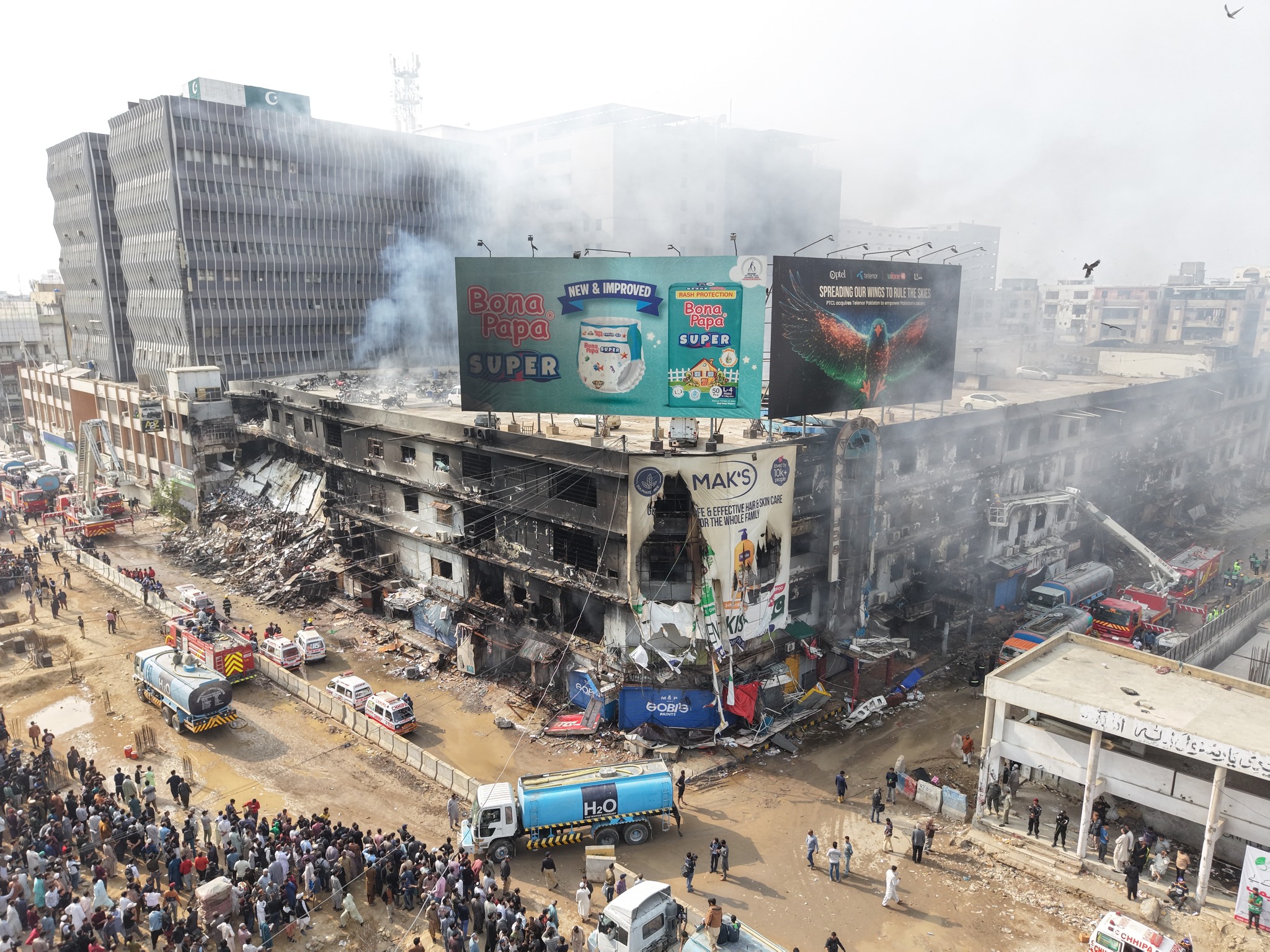
KARACHI: The first hearing of the judicial commission formed to investigate the tragic Gul Plaza fire incident was held on Monday at the office of the Deputy Commissioner South under the chairmanship of Justice Agha Faisal. During the proceedings, 23 relatives of the 33 deceased victims recorded their statements, many breaking down in tears as they described the harrowing events and alleged negligence by rescue authorities.
The session began with prayers for the departed souls. Justice Agha Faisal met with the families of the victims and expressed deep sorrow over the loss of lives. He stated that the purpose of the tribunal was to prevent such incidents in the future, emphasizing that while financial losses can be compensated, human lives cannot. He urged all affected families to submit their statements to help the commission reach the truth and said information was being sought from the public, government authorities, and rescue workers.
Several eyewitnesses and relatives alleged gross negligence on the part of emergency services. They claimed that fire brigade teams lacked adequate water, diesel, and modern firefighting equipment. Some stated that no rescue personnel entered the building despite desperate cries for help from inside. Witnesses said the fire spread rapidly within 10 to 15 minutes, engulfing the entire structure.
Abdul Aziz, brother of a deceased victim, told the commission that when he arrived at the scene around 10:30 pm, only one fire brigade vehicle was present. Although ambulances were at the site, he claimed no one entered the building. He further alleged that doors were locked, contrary to official statements.
Hafeez, father of another victim, said thick smoke in the rear portion of the building prevented visibility, and even rescue workers did not enter. He stated that light explosions were heard from inside and that identification of his son was confirmed through DNA testing days later.
Multiple families described receiving last phone calls from their loved ones, who reported suffocation due to smoke and lack of oxygen. A grieving mother recounted how her son told her the fire brigade had run out of water. She said her younger son attempted to rescue his brother but returned with burn injuries due to extreme heat inside the building.
Another affected citizen, Qaiser, alleged that he suggested breaking a wall from an adjacent alley to facilitate evacuation, but authorities did not act on his proposal. He claimed rescue teams only sprayed water on the exterior walls and lacked the necessary machinery to save those trapped inside.
Several witnesses criticized the absence of proper announcements directing people to safer exits or rooftops, despite the presence of snorkel equipment. They alleged that smoke first accumulated on the mezzanine floor and that many shop entrances were blocked with brickwork, leaving no escape routes.
Relatives also complained of mistreatment by officials and prolonged bureaucratic delays after the tragedy. Zahid Farooq urged the commission to establish a one-window operation to facilitate victims families, stating they were made to wait for hours at different offices.
Abdul Hafeez, whose son-in-law perished in the fire, alleged that fire brigade officials told him they had limited water and diesel and asked citizens to arrange supplies themselves. He blamed poor policy planning and demanded that firefighting departments be properly equipped to prevent future disasters.
Justice Agha Faisal informed participants that the commission had received a list of 64 heirs from the administration and had prepared a questionnaire for affected families. He requested that all relatives submit their completed forms to the commissions secretariat or the DC South office to ensure comprehensive findings.
Concluding the session, the commission recorded statements from 23 relatives and reaffirmed its commitment to uncovering facts and recommending measures to avoid similar tragedies in the future.


KIndly send your profile. Thanks
[…] Also read: Karwan-e-Hayat Hosts Delegation from Pakistan Institute of Living and Learning and Univer… […]
[…] Korangi Police Arrest Two Key Suspects in Rs. 9.7 Million Cash Van Robbery within 24 Hours […]